
The more I learn, the less I know
Have you ever had that feeling that the more things you learn, the more things you have left to learn?
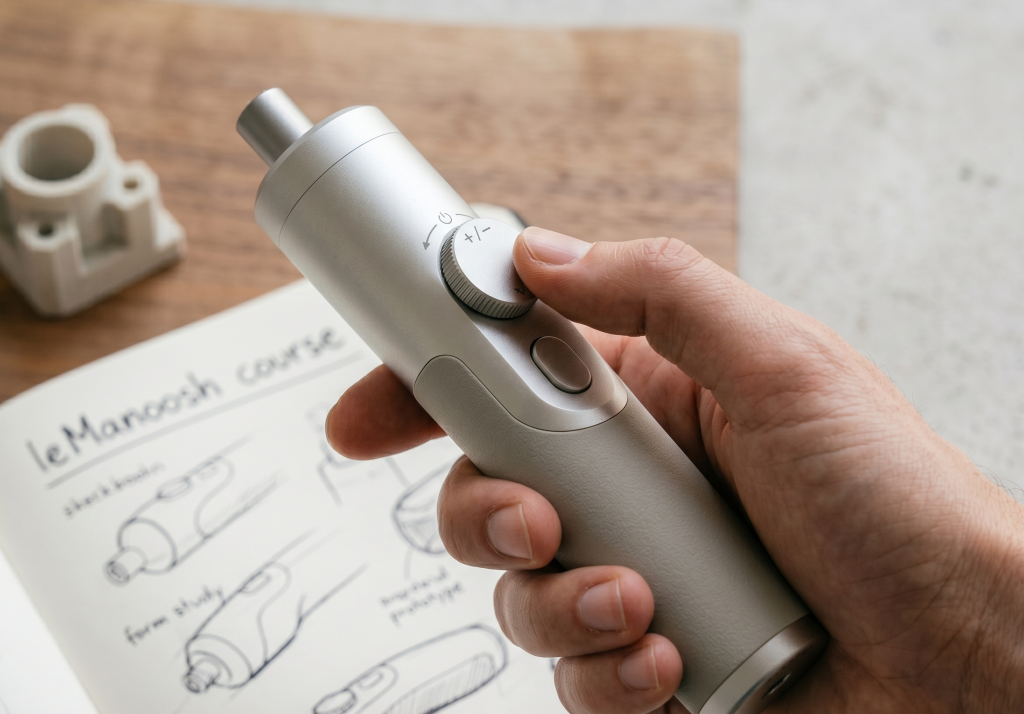
Over the past few weeks, I had the opportunity to attend a specializer course byleManoosh, led by industry referents such as Alexandre Nys,Mads Hindhede Svanegaard orJames Melia from BLOND. The challenge was to design a power tool for users who use tools a couple of times a year, and don’t have much experience.
This exercise was a journey back to the basics, a chance to rediscover the core principles that define my projects. During the process, I started to get that feeling that the more I delve into new topics, the more I rediscovered what I had already learned and realized that I still have a lot to discover. Here are three keys that every industrial designer should keep.
𝗗𝗲𝘁𝗮𝗶𝗹s as a visual language
In industrial design, a product is not a single object; it’s a set of elements that complement each other creating a coherent visual language and a user experience.
Details are significant because they are the direct line of communication between the product and the user. Texture, material or shape are not just aesthetic choices. They are signals that tell the user how to hold, use and value the product, ensuring that the experience is like a natural dialogue.
𝗦𝗶𝗺𝗽𝗹𝗶𝗳𝘆 𝘁𝗵𝗲 𝗳𝗼𝗿𝗺
Making the product intuitive and understandable for the user is fundamental to design a successful object. Ultimately, the dialogue between the product and the user is essential.
When we simplify the form, we are removing the noise to let the object’s purpose speak for itself. A successful design guides the user through its shape without the need for an instruction manual. Simplicity is a competitive advantage.
𝗜𝗺𝗽𝗿𝗼𝘃𝗲 𝘁𝗵𝗲 𝗳𝗲𝗲𝗹 𝗮𝗻𝗱 𝗲𝘅𝗽𝗲𝗿𝗶𝗲𝗻𝗰𝗲 𝗼𝗳 𝘂𝘀𝗲.
Lately, the term UX has become very much related to digital design. However, we must not forget that it is one of the most important aspects of physical object design.
Since the tactile sensations, the unboxing experience or the operation of the product are significant in the user’s perception. In industrial design, UX is tangible because it’s about how an object feels in the hand.
These points are just some of the few aspects to take into account in industrial design, but I found them to be obvious and sometimes we forget to deal with them in depth. My time with leManoosh course was a powerful reminder that design is a continuous process of learning.